EVA: A Conversational Banking Platform for Everyday Channels
How I designed Equity Bank's chatbot across WhatsApp, Messenger, and Telegram, reducing routine support queries by 30% for 21M+ customers.
Disclaimer: Some details in this case study may be vague to protect client IP under NDA.
Overview
Banking where people already are
EVA (Equity Virtual Assistant) is Equity Bank's AI-powered conversational banking platform. Instead of asking customers to download an app, log into a portal, or queue at a branch, EVA lives inside the messaging apps they already use every day.
EVA launched on WhatsApp, Facebook Messenger, and Telegram, giving Equity's millions of customers the ability to check balances, send money, buy airtime, access loans, pay bills, and raise support tickets through a chat interface, available 24/7.
Results
- 30% reduction in routine support queries
- Available 24 hours a day, 365 days a year
- Works on any Android device with WhatsApp
Project Details
-
Role
Product Designer -
Channels
WhatsApp, Messenger, Telegram -
Team
1 Designer · 1 PM · 2 UX Writers · 1 Researcher · 4 Engineers -
Year
2023 -
Scale
21M+ customers, 6 countries
Context & Landscape
Banking a continent on mobile
"The question wasn't whether customers wanted to bank digitally. It was whether the bank was showing up where they already were."
The Problem
Banking was getting in the way of banking
When customers needed something simple, an account balance, a loan repayment status, a mini statement, the path was anything but simple. Call the hotline, wait on hold, navigate IVR menus, and eventually reach an agent just to ask something answerable in 10 seconds.
- Long wait times - Customers waited significant time for queries simple enough to be in an FAQ.
- Device exclusion - Equity's app was regularly updated, but older Android phones couldn't always run the latest version.
- Rising support costs - Every call has a cost. With millions of customers calling for routine queries, the contact centre load kept climbing.
- No off-hours access - Branch banking hours are 8am–4:30pm. After that, customers were largely on their own.
Design Process
Research first, always
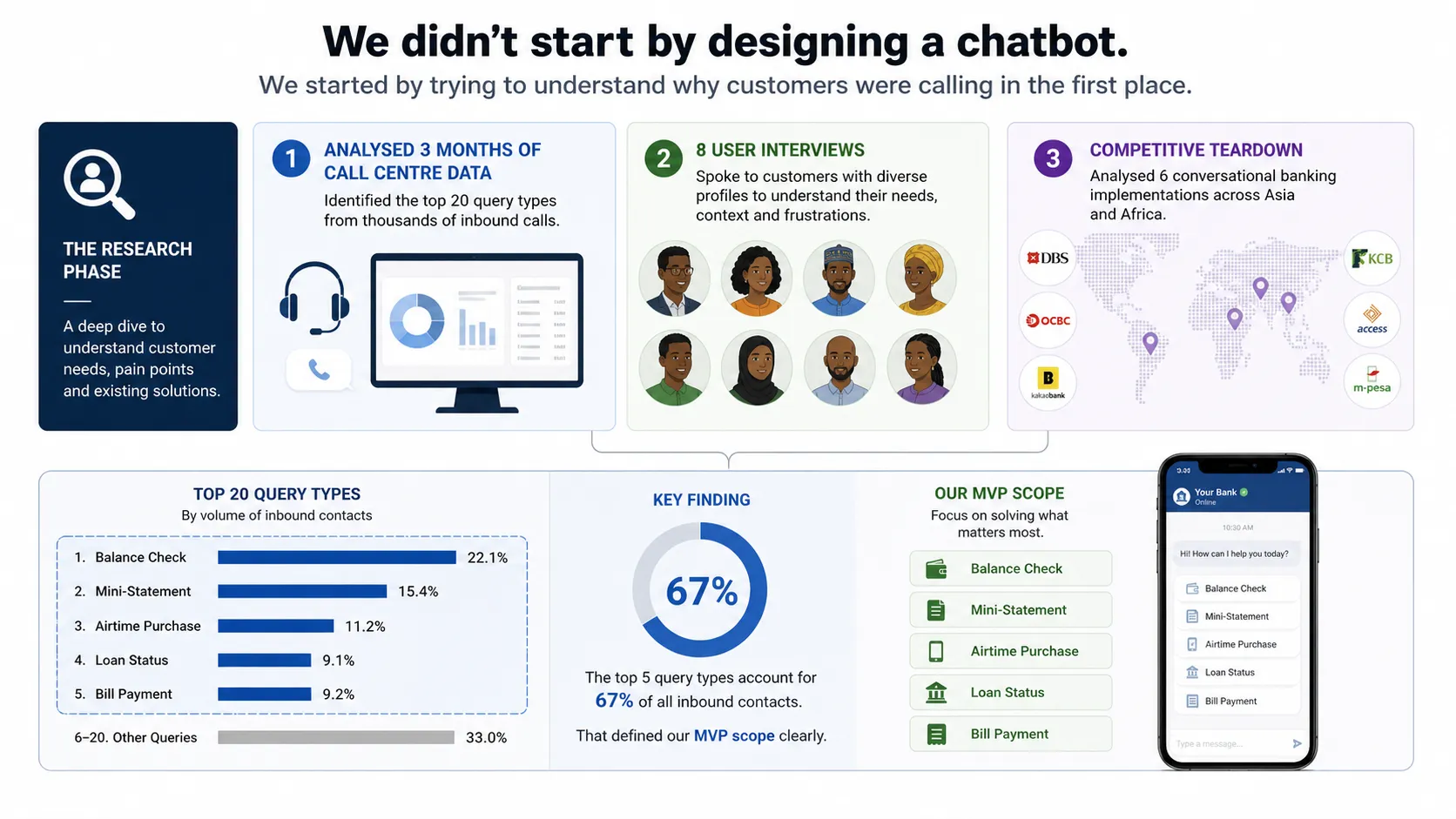
We didn't start by designing a chatbot. We started by trying to understand why customers were calling in the first place. The research phase involved analysing 3 months of call centre data (identifying the top 20 query types), 8 user interviews with diverse customer profiles, and a competitive teardown of 6 conversational banking implementations across Asia and Africa.
The top 5 query types balance check, mini-statement, airtime purchase, loan status, bill payment accounted for 67% of all inbound contacts. That defined our MVP scope clearly.
Conversation Design
The design work lives in the logic
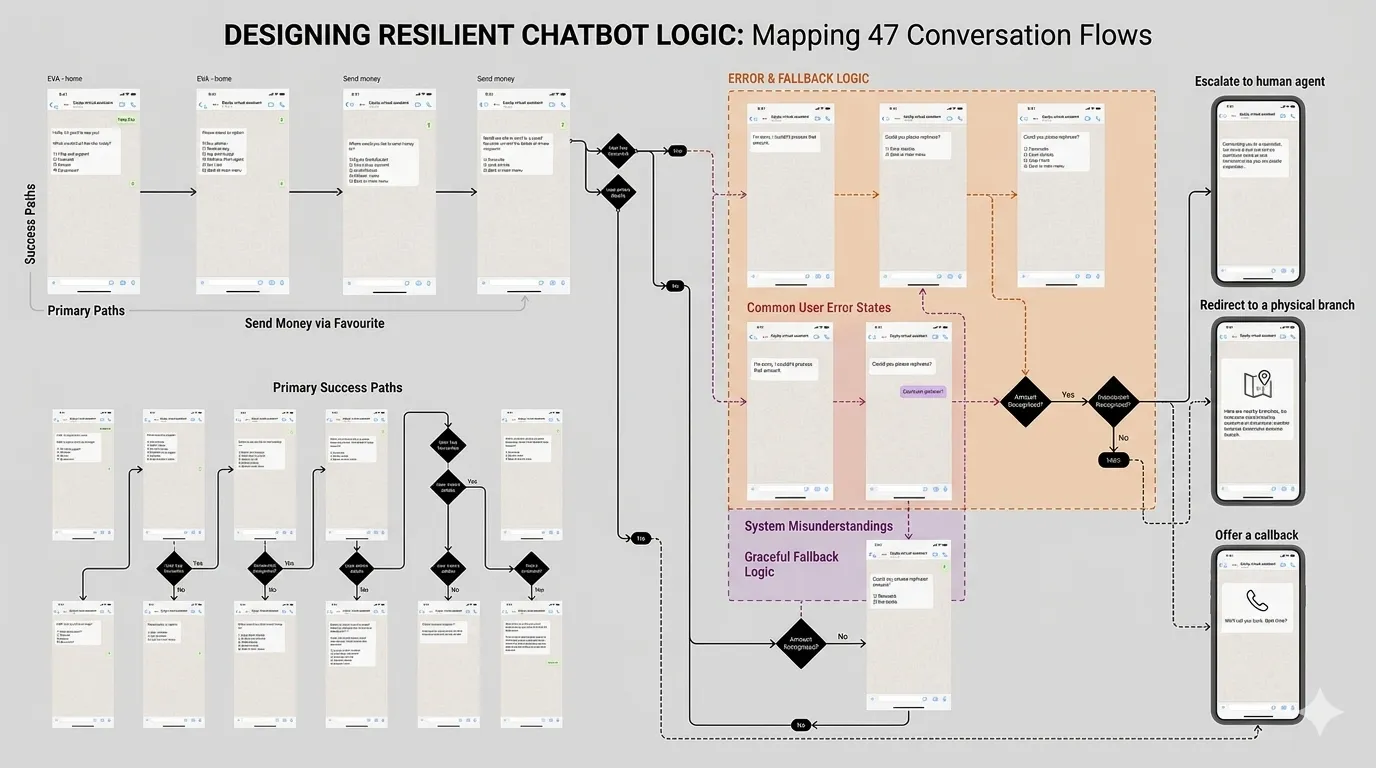
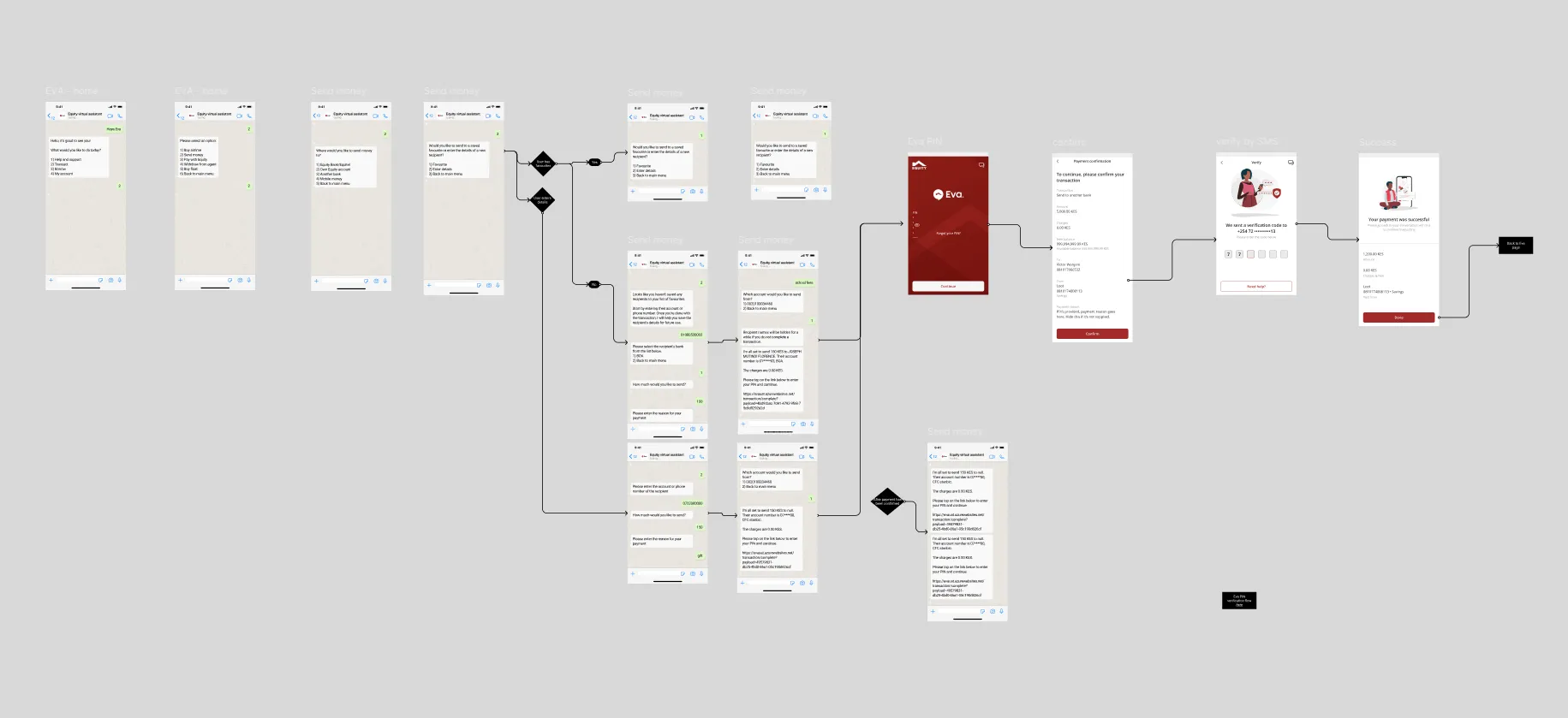
A chat interface sounds simple it's just text, right? But the design work lives in the logic: the branching paths, the fallback states, the moments where the bot has to gracefully acknowledge it doesn't understand without making the customer feel lost.
I mapped out 47 distinct conversation flows, each with primary paths, error states, and graceful fallbacks. The cardinal rule: never leave a customer stuck. Every dead end has an escape escalate to human agent, redirect to a branch, or offer a callback.
Final Designs
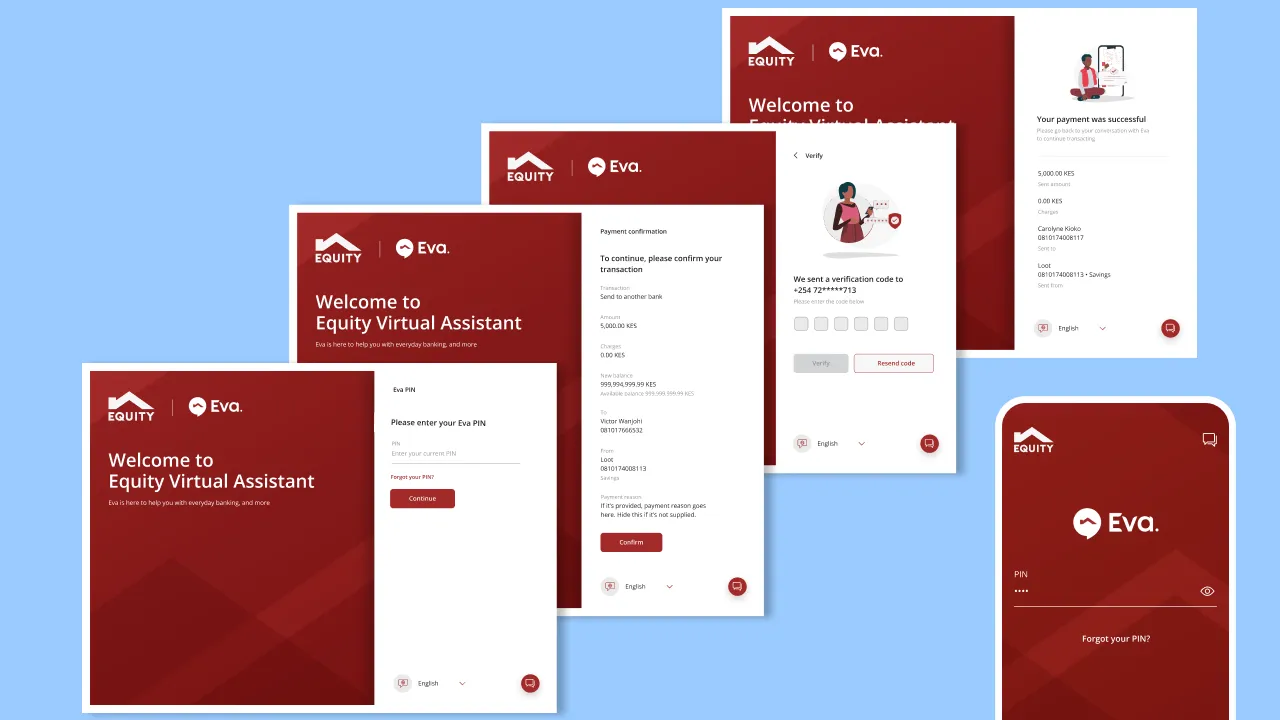
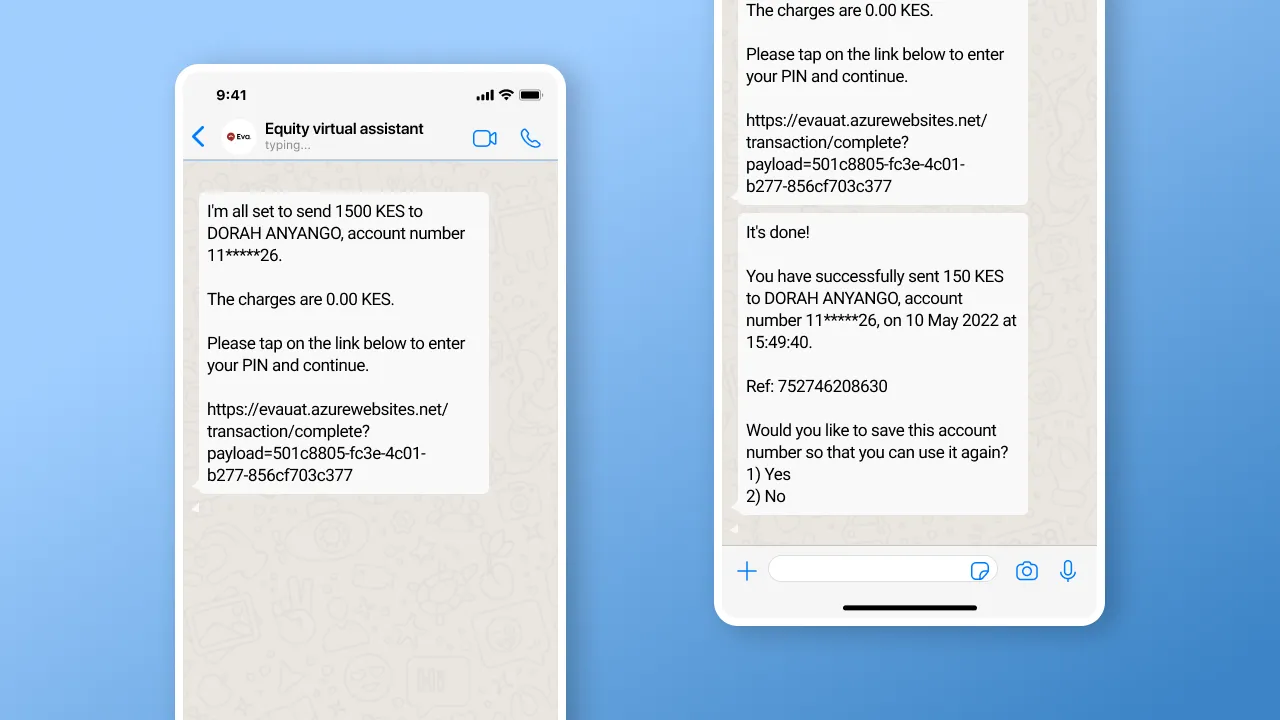
EVA across three channels
Retrospective
What I'd do differently
Invest more in onboarding discovery. Many users didn't know EVA existed until they called the hotline and were redirected. A proactive onboarding campaign push notifications, in-app banners, SMS would have driven adoption faster.
Build a feedback loop earlier. We didn't have a good way to capture when EVA failed until post-launch analytics. An in-conversation "Did that help?" prompt from day one would have surfaced failure patterns much faster.
Conversation design needs its own sprint track. Dialogue writing and UX design often happened in parallel but should have been more tightly coordinated some inconsistencies in tone only surfaced during QA.