Built, shipped, or in progress
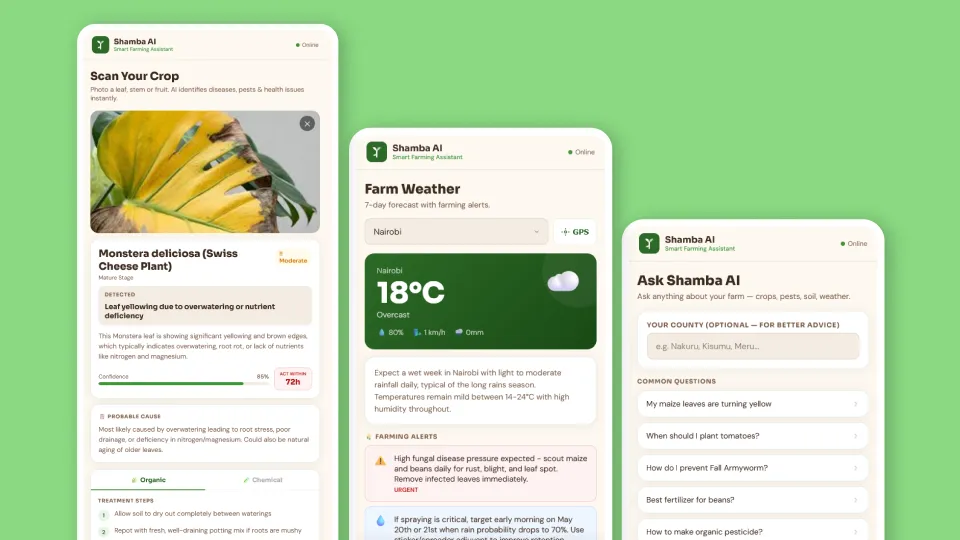
AI-powered farming companion for Kenyan smallholder farmers. Scan crop diseases with your phone camera, get personalized crop recommendations based on your county and land size, ask farming questions via chat, and receive weather-based farming alerts, all in one mobile-friendly interface.
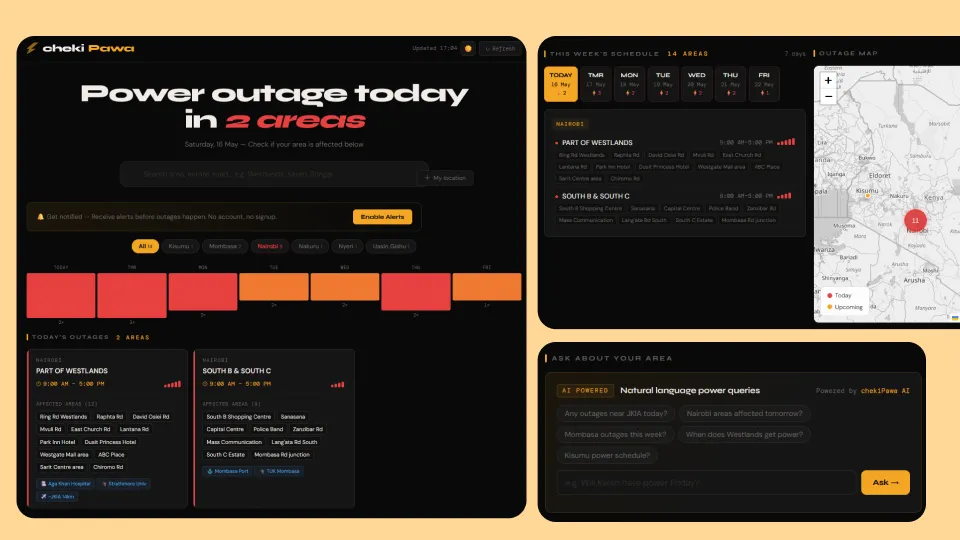
Real-time KPLC power outage tracker that aggregates scheduled maintenance data from multiple sources and presents it through an interactive map, timeline, and AI-powered natural language queries. Built for Kenyan residents to plan around planned power interruptions.
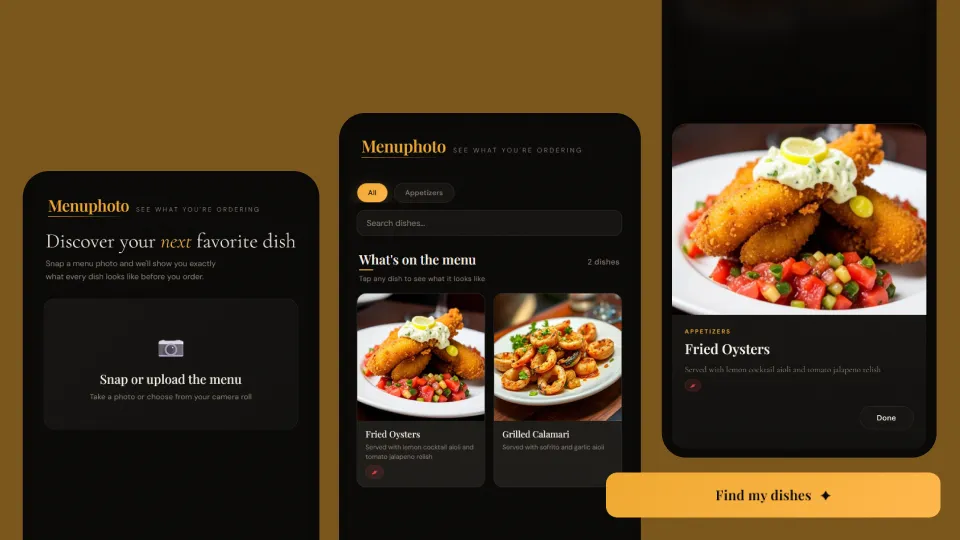
Snap a photo of any restaurant menu and instantly see realistic AI-generated images of each dish. No more guessing what your food looks like before ordering. Just point, shoot, and browse mouthwatering visuals.
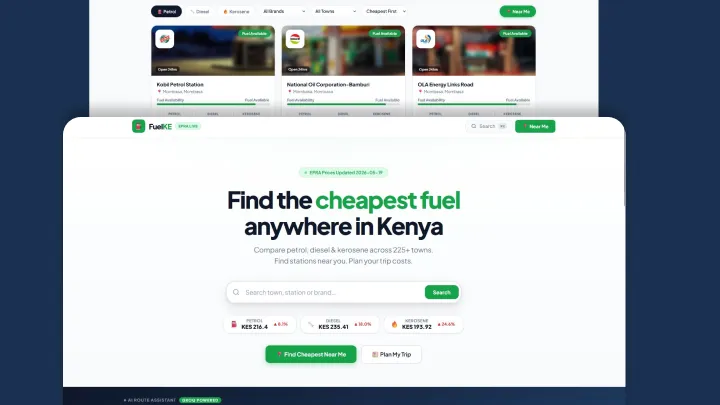
Compare petrol, diesel & kerosene across 225+ towns. Find stations near you. Plan your trip costs.
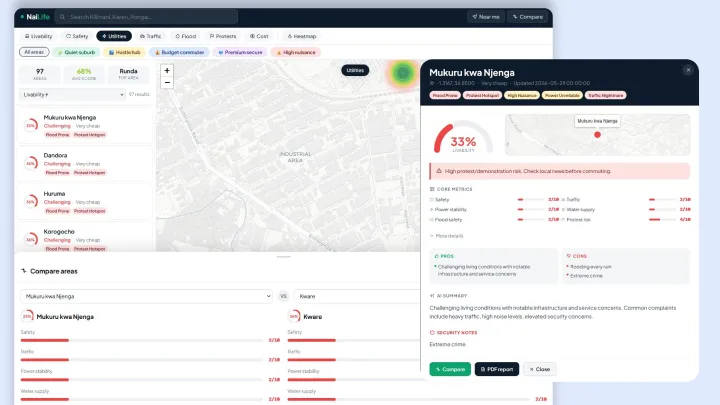
The platform combines data and AI-generated insights to help compare neighborhoods across Kenya.
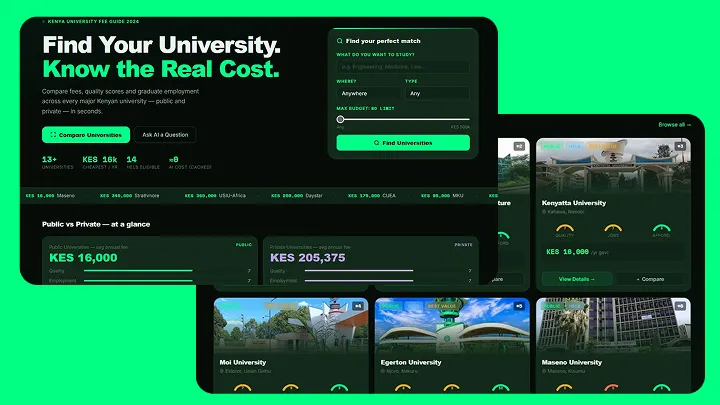
An AI-powered campus companion designed to bring academic, administrative, and campus resources into a single intelligent platform.
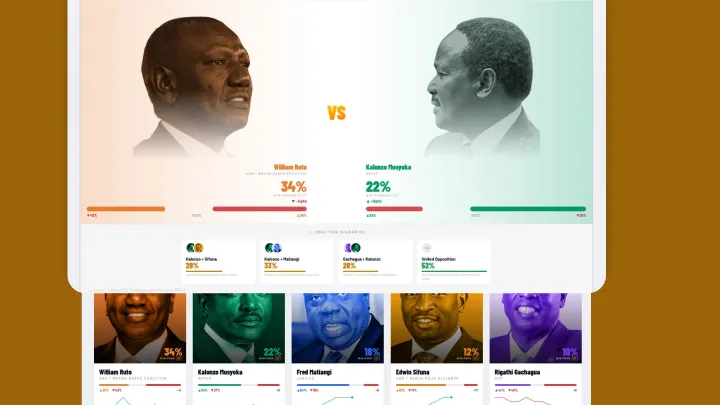
An AI-powered political intelligence dashboard designed to track and analyze Kenya's evolving political landscape ahead of the 2027 General Election.
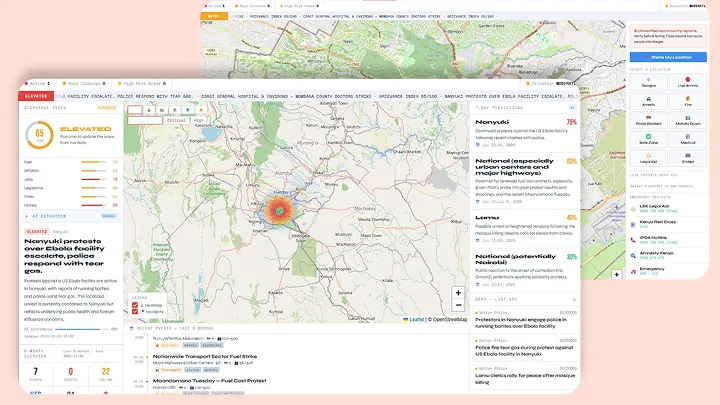
AI-powered platform that tracks protest activity, maps hotspots, analyzes risk signals, aggregates news intelligence, and generates situational insights.
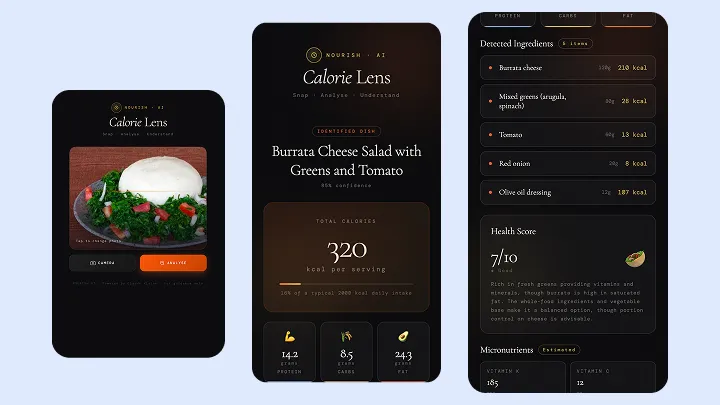
Upload any food photo and get an instant calorie estimate, nutrition breakdown, and healthier eating recommendations.
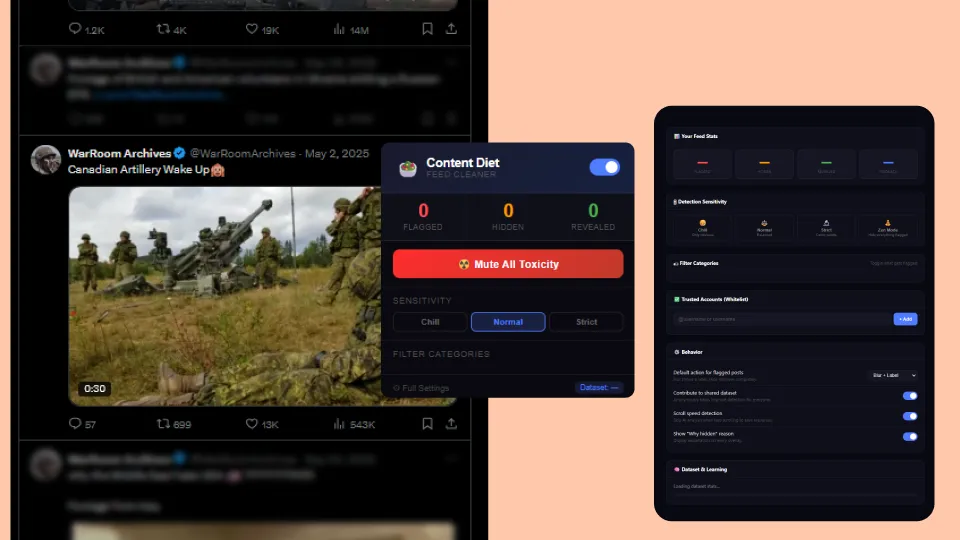
AI-powered social media content filter. Labels emotional manipulation, rage bait, FOMO, and toxicity.
Claude-powered chatbot embedded in this portfolio. Voice input, 5-question session limit, markdown rendering, and context-aware project chat on each case study.
Paste any job description, Claude scores the fit against my profile, highlights matched skills, partial matches, and gaps, then generates a tailored cover letter.
How I think about AI in design
AI doesn't replace the judgment of a good designer. It replaces the mechanical parts, the repetitive microcopy, the bulk illustration generation, the edge case enumeration.
What's left is the work that actually matters: insight, strategy, empathy, and the ability to ask the right questions before opening a tool. The designers who matter most in the next 5 years aren't the ones who avoid AI, they're the ones who understand its limits well enough to know exactly when not to use it.